


24/7 Car Recovery and Breakdown Help in Hull
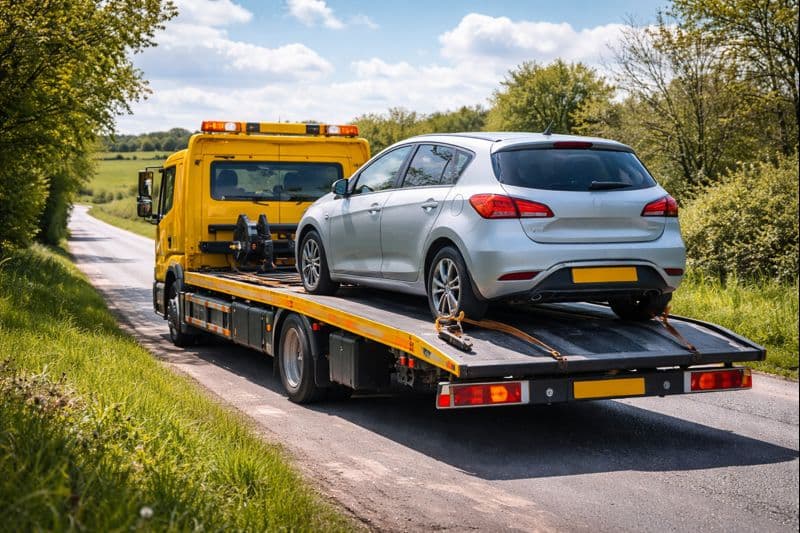
Car recovery in Hull is available 24/7 for breakdowns, accidents and non-running vehicles, with a target response of 30-45 minutes across the city and nearby East Riding areas. Dispatch covers cars, vans, motorcycles, EVs, hybrids, classics and low-clearance vehicles, with equipment selected to match the fault and vehicle position. Common call-outs include flat batteries, alternator failure, clutch or gearbox faults, overheating, punctures, misfuelling and locked keys. If the vehicle cannot be made mobile safely at the roadside, it is loaded, winched or lifted for transport to a garage, home address or another safe destination.
Recovery Across Hull's A63, A1033 and City Roads
Hull recovery coverage follows the routes drivers use most. The A63 Clive Sullivan Way and Castle Street carry traffic between central Hull, Hessle and the route west towards the M62, while the A1033 Hedon Road serves the Port of Hull and eastern industrial areas. Recovery also covers the A1079 Beverley Road, A165 Holderness Road, A1165, A1166 and A1105, together with local streets around Kingswood, Bransholme, Newland, Drypool, Marfleet and Victoria Dock. Nearby call-outs extend to Hessle, Anlaby, Willerby, Cottingham, Bilton, Hedon and surrounding communities.
Roadside Assistance or Full Vehicle Recovery?
Roadside assistance is used when the vehicle can be returned to safe running condition without transport. A suitable battery can be jump-started, a straightforward wheel or tyre issue can be assessed, and access problems such as locked keys can be dealt with according to the vehicle. Alternator faults, failed clutches, gearbox problems, serious overheating and accident damage require full recovery instead. On the A63 and other high-speed roads, get to a place of relative safety where possible, switch on hazard lights and stay away from moving traffic while help is arranged.
EV, Hybrid and Low-Clearance Recovery in Hull
EVs, hybrids and low-clearance cars require loading methods that protect the drivetrain, battery area, bumpers and underside. A flatbed recovery vehicle keeps the recovered vehicle fully supported, while low-angle ramps and controlled winching reduce the risk of splitter or sill contact on sports cars and modified vehicles. Dollies provide a solution when wheels are locked or cannot rotate normally, and a spec-lift supports appropriate recovery situations where direct towing is suitable.
Motorcycles and classic cars receive vehicle-specific securing rather than a one-method-fits-all tow. Vans are matched to a recovery unit with suitable capacity. For an HGV or heavier commercial call, vehicle weight, axle arrangement and condition are confirmed before dispatch so the required recovery capacity is identified.
Hull Recovery Dispatch, Transport and Cost Factors
A Hull recovery call starts with the exact location, registration, vehicle type, fault and required destination. The dispatcher also checks whether the keys are present, the steering operates, the gearbox selects neutral and the wheels roll; those details determine whether a flatbed, winch, dollies or another recovery method is required.
Recovery pricing is based on the call-out, distance travelled, vehicle size and weight, accessibility, time of service and equipment required. A locked-wheel vehicle in a confined Hull city-centre car park requires a different loading process from a running vehicle being transported from Cottingham to Hessle. Pre-booked vehicle transportation is also available for purchases, non-runners, workshop movements, EVs and classic cars.
For 24/7 car recovery in Hull, provide your location, vehicle details and destination when you call so the correct recovery vehicle can be dispatched without delay.